Learn More about Large Cats!
Lion
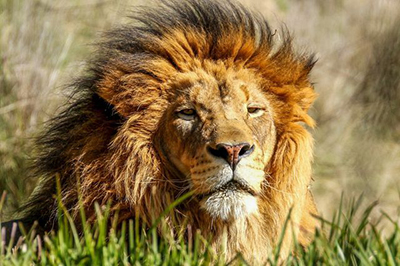 "Lions are the only cats that live in groups, which are called prides. Prides are family units that may include up to three males,
a dozen or so females, and their young. All of a pride's lionesses are related, and female cubs typically stay with the group as
they age. Young males eventually leave and establish their own prides by taking over a group headed by another male."
Retrieved from http://www.nationalgeographic.com/animals/mammals/a/african-lion/ on September 8, 2017
"Lions are the only cats that live in groups, which are called prides. Prides are family units that may include up to three males,
a dozen or so females, and their young. All of a pride's lionesses are related, and female cubs typically stay with the group as
they age. Young males eventually leave and establish their own prides by taking over a group headed by another male."
Retrieved from http://www.nationalgeographic.com/animals/mammals/a/african-lion/ on September 8, 2017
Tiger
 "The largest of all the Asian big cats, tigers rely primarily on sight and sound rather than smell for hunting. They typically hunt alone and stalk prey.
A tiger can consume up to 88 pounds of meat at one time. On average, tigers give birth to two to four cubs every two years. If all the cubs in one litter die,
a second litter may be produced within five months. Tigers generally gain independence at two years of age and attain sexual maturity at age three or four
for females and at four or five years for males. Juvenile mortality is high however—about half of all cubs do not survive more than two years. Tigers have
been known to reach up to 20 years of age in the wild. Males of the largest subspecies, the Amur (Siberian) tiger, may weigh up to 660 pounds.
For males of the smallest subspecies—the Sumatran tiger—upper range is at around 310 pounds. Within each subspecies, males are heavier than females. "
Retrieved from https://www.worldwildlife.org/species/tiger on September 8, 2017
"The largest of all the Asian big cats, tigers rely primarily on sight and sound rather than smell for hunting. They typically hunt alone and stalk prey.
A tiger can consume up to 88 pounds of meat at one time. On average, tigers give birth to two to four cubs every two years. If all the cubs in one litter die,
a second litter may be produced within five months. Tigers generally gain independence at two years of age and attain sexual maturity at age three or four
for females and at four or five years for males. Juvenile mortality is high however—about half of all cubs do not survive more than two years. Tigers have
been known to reach up to 20 years of age in the wild. Males of the largest subspecies, the Amur (Siberian) tiger, may weigh up to 660 pounds.
For males of the smallest subspecies—the Sumatran tiger—upper range is at around 310 pounds. Within each subspecies, males are heavier than females. "
Retrieved from https://www.worldwildlife.org/species/tiger on September 8, 2017
Lynx
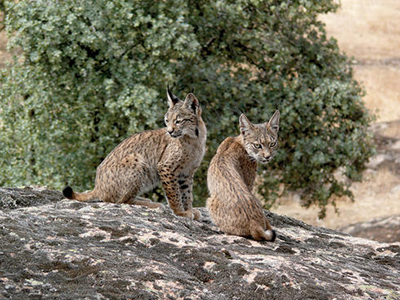 "Lynxes live in the boreal forests of North America and in the Canadian Rockies. These cats dine on birds, fish and mammals, primarily snowshoe hares.
Cousin to the bobcat, the lynx is characterized by its short body, tufted ears and cheek ruffs. Their paws are large and furry, which evenly distributes
their weight while moving over snow. During the spring, females give birth to litters of two to three kittens in stumps or fallen logs to protect them from predators.
Lynxes are at risk due to loss of prey species and hunting for fur. "
Retrieved from https://gifts.worldwildlife.org/gift-center/gifts/species-adoptions/lynx.aspx on September 8, 2017
"Lynxes live in the boreal forests of North America and in the Canadian Rockies. These cats dine on birds, fish and mammals, primarily snowshoe hares.
Cousin to the bobcat, the lynx is characterized by its short body, tufted ears and cheek ruffs. Their paws are large and furry, which evenly distributes
their weight while moving over snow. During the spring, females give birth to litters of two to three kittens in stumps or fallen logs to protect them from predators.
Lynxes are at risk due to loss of prey species and hunting for fur. "
Retrieved from https://gifts.worldwildlife.org/gift-center/gifts/species-adoptions/lynx.aspx on September 8, 2017